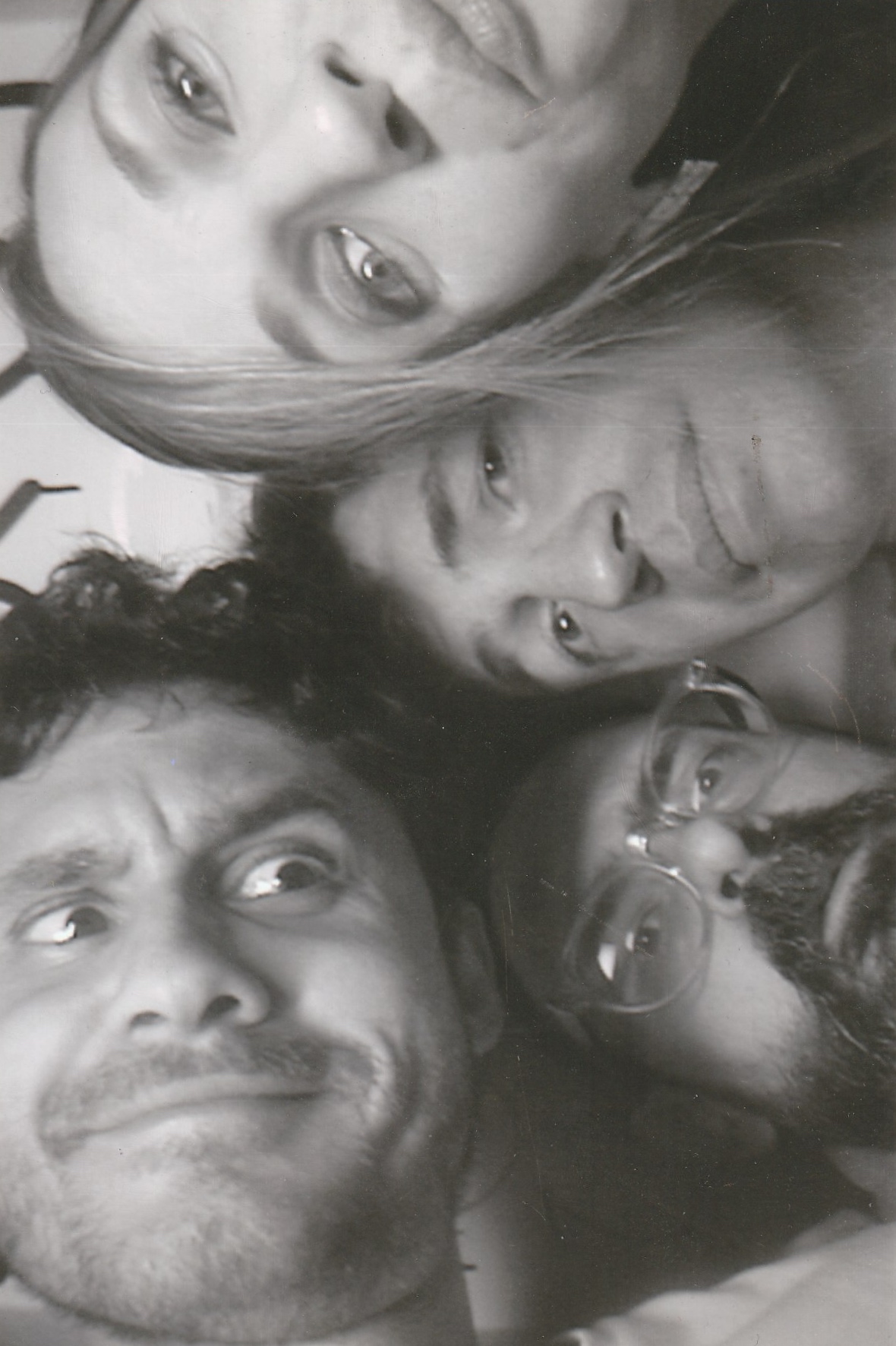
Le Big Zero, a Brooklyn-based band formed in 2019, continues to push the boundaries of music with their unique blend of pop sensibilities and punk spirit. Their new EP out today, How To Use a Semicolon, is a bold statement of purpose, marking a return for singer Carolina Aguilar after taking time off for motherhood. Alongside guitarist Michael Pasuit, Aguilar delivers an emotive vocal performance that deepens the band’s sound, which combines angular dynamics, melodic dissonance, and electric textures. In just three tracks, the EP showcases their ability to creatively explore rock music’s possibilities, offering a fresh, accessible take on an unconventional style. We caught up with the band to talk to them about writing the new EP:
Q: In your opinion, what are the essential qualities that make a “good songwriter”?
Leaning into yourself. A good songwriter has their own voice and doesn’t sound like a retread. I find the two chords and near eight minutes of LCD Soundsystem's "All My Friends" just as brilliant as the twenty chord changes and crescendos of David Bowie's "Life on Mars." It's tough to define exactly and saying something like "just be true to the song" kinda sounds like pretentious artist-speak. But it's not wrong either.
Le Big Zero often deals in lots of chord changes, angular presentation, and atypical time signatures. I'm finally realizing that I think music first--my brain working overtime, and then my heart catches up. Not to say I don’t “feel” it, it’s that what I feel is inextricably connected to how well I can avoid the verse-chorus-verse-chorus thing. In the rehearsal room, I think we're all tickled when a song surprises us. Like it's a dare to elicit "that's not where the chorus goes" or "does this even have a chorus" yet it all still works. We're happy when the song is difficult to play, but still connects, if that makes sense. It's rewarding, being sneaky and all. I have no aims on being a criminal, but I think I’d be good at planning a heist.
Q: What is the basis for writing attention-grabbing music in this day and age?
Ha. Not sure we've solved that equation. It depends if you want cheap thrills or to cultivate an audience. These days, new music is essentially free and the ability to create high-quality recordings has become easier and easier, so the floodgates are open with little curation. That said, you can find your tribe--you just need to be willing to put the work in to find them. Get out there. Play live. See shows. Absorb everything you can to get better at putting yourself out there.
I'm not sure we're looking to grab attention if that attention is meaningless. I still want to create a 15+ track full length on physical media, and that's actually what Le Big Zero is working towards right now even as we're releasing this EP. That's what speaks to us, moves us, and reflecting that vibe back at our audience is what we're looking for.
Q: Can you pinpoint some specific songs and songwriters that changed the way you write music?
Such a hodgepodge. Built to Spill was a big one for me. Doug Martsch and his wall of weaving guitar hooks. I can find new things in their music even years later. The abrasive yet melodic approach of a band like Pile (or Chavez before that... or Jawbox before that). But harmonies always moved me too, so I was drawn to bands like Crosby Stills and Nash and The Jayhawks growing up. Harmonies have always been important to the DNA of Le Big Zero. Loved the restraint and quiet intensity of Low (Mimi Parker was a treasure and will be sorely missed). And Wye Oak--evolving with each album, exploring all these little tangents from their core sound. It's important to evolve. If you find an artist you truly admire, trust them to take you to new places. Don't get angry that this album doesn't sound like the previous one.
Stuffing that all into the same sandwich is the challenge. I'm not sure any single one outpaces another.
Q: Do you find it hard to be inspired by your peers? Can you name any new artists you find inspiring?
There's a wonderful, supportive scene here in Brooklyn right now. It's impossible to not be inspired by this level of community. This year, been digging on Debbie Dopamine (exploring textures and orchestration with "Worried" and more in-your-face composition with "Negative Space"), Ilithios (like I said, I admire complete thoughts, albums as albums, and "Every Bird Ever" is a true start-to-finish wistful, bittersweet listen), and Desert Sharks (they've been stalwarts of the scene and are still serving up great gloomy vibes, with 2024's "Deeper" probably being my favorite single of theirs), as well as Onesie, who always succeed in capturing a feel of playfulness in deceptively intricate songs, something we also aim for.
Q: For your new album, what inspired the lyrical content, album title, and overall vibe?
The album is about arriving late to the party and getting in your own way. My foot lives in my mouth yet I can't stop talking. All the songs are pretty different but they all sound like us. It pops and grooves on "How Very," gets a bit heavier on "Cheap Men in French Cars," and settles into slacker rock on "Funnel Cake at a Funeral." As you can tell from the titles, all of this is very tongue in cheek. We take the music seriously, but ourselves... not so much. The lyrics reflect life situations that are well-intentioned, but resulting in actions that are less than graceful.
"How to Use a Semicolon" came from thinking about the timeline of the band. Various stops and starts. Lineup changes, babies, concussions, creative dry spells. It's a long sentence that isn't close to being punctuated with any finality. So why not a semicolon? Will anyone even know if we used it correctly?
Q: Do you find that you ruminate over writing songs and hold on to them for a long time before including them on a record? Or do you prefer to write them, release them, and be done with them? Do you ever re-visit old material to do a re-write or once it’s done it’s done?
Wow. You're asking the right band. My phone is a scrapyard for unused riffs, jams, and room recordings that I listen to constantly. But I'm very much a proponent that no song will ever be perfect when you release it and I'll want to continue tinkering well after it’s released. So there needs to be these self-imposed cutoffs.
We do put many ideas on the backburner and let them simmer for quite a while. Most of "How Very" was completed in 2019 actually. It just didn't take its final form until now. And a song like "Funnel Cake" maybe only took a week to complete and feel good about. Most of the time, if you get too precious with a song, you lose the emotional thread of why you liked the idea in the first place.
On the other hand, for our previous album "At Arm's Length", the ending guitar part of "Spin Cycle" was something I wanted to use forever, but I didn't want to "waste" it. It was written when I was in a very emotional state. That one was special to me, so it's fitting that one appears on our longest, most emotional song.
Q: Were there any lessons you learned in the writing and recording process for your current release that you will take with you into your next project?
Yes. This is a semicolon. The sentence is much longer. And while this segment is a bit varied in approach--clashingly colorful? confidently confused, shall we say?--the next one is very cohesive. Until we change our minds our minds again, that is.